


01 Jul Everything You Need to Know About ClickFix Attacks
Summary:
- ClickFix attacks are scams that trick website visitors into infecting their own computer, without needing to exploit a single technical flaw on their device.
- Attackers often plant it on legitimate websites, including poorly secured .lk sites, by injecting a fake “verification” pop-up.
- If this happens on your site, your visitors get infected, your domain’s reputation suffers, and LK Domain Registry may have to restrict your domain.
- It is recommended to keep software updated, watching for unfamiliar scripts, and never pasting commands from a website.
What is ClickFix?
ClickFix is a social engineering attack, not a technical hack. It works by convincing a website visitor that something needs fixing, usually shown as a fake CAPTCHA, browser warning, or system alert, and prompting them to act immediately. Instead of exploiting a flaw in the software, the attack gets the victim to run a malicious command on their own device, step by step, in a process made to look routine and safe.
ClickFix attacks largely depend on user trust rather than on a technical vulnerability. Surprisingly, most people don’t realize their device has been compromised until it’s too late.
Why This Matters to You as a .lk Domain Website Owner?
ClickFix attacks don’t stop at your regular visitors. Once attackers compromise your website, they can use it as a delivery point for anyone they choose to target, including people who land on your website through a phishing email rather than by visiting your site directly. That means two distinct groups can end up affected:
- People who already know and trust your website.
- People attackers deliberately route to your website through scams.
Attackers frequently compromise legitimate, otherwise-trustworthy sites (commonly through outdated CMS platforms, plugins, or themes) and quietly inject the fake verification prompt into existing pages. Even if your own device is never touched, an unmonitored .lk domain website can still end up being used as someone else’s attack tool.
If this happens to your .lk domain website, the consequences extend beyond your own systems:
- Your visitors are put at direct risk of having their devices and accounts compromised.
- Your site’s reputation can be flagged or blacklisted by browsers and security vendors.
- LK Domain Registry may contact you to remediate the issue and can restrict or take down the domain if there’s no response.
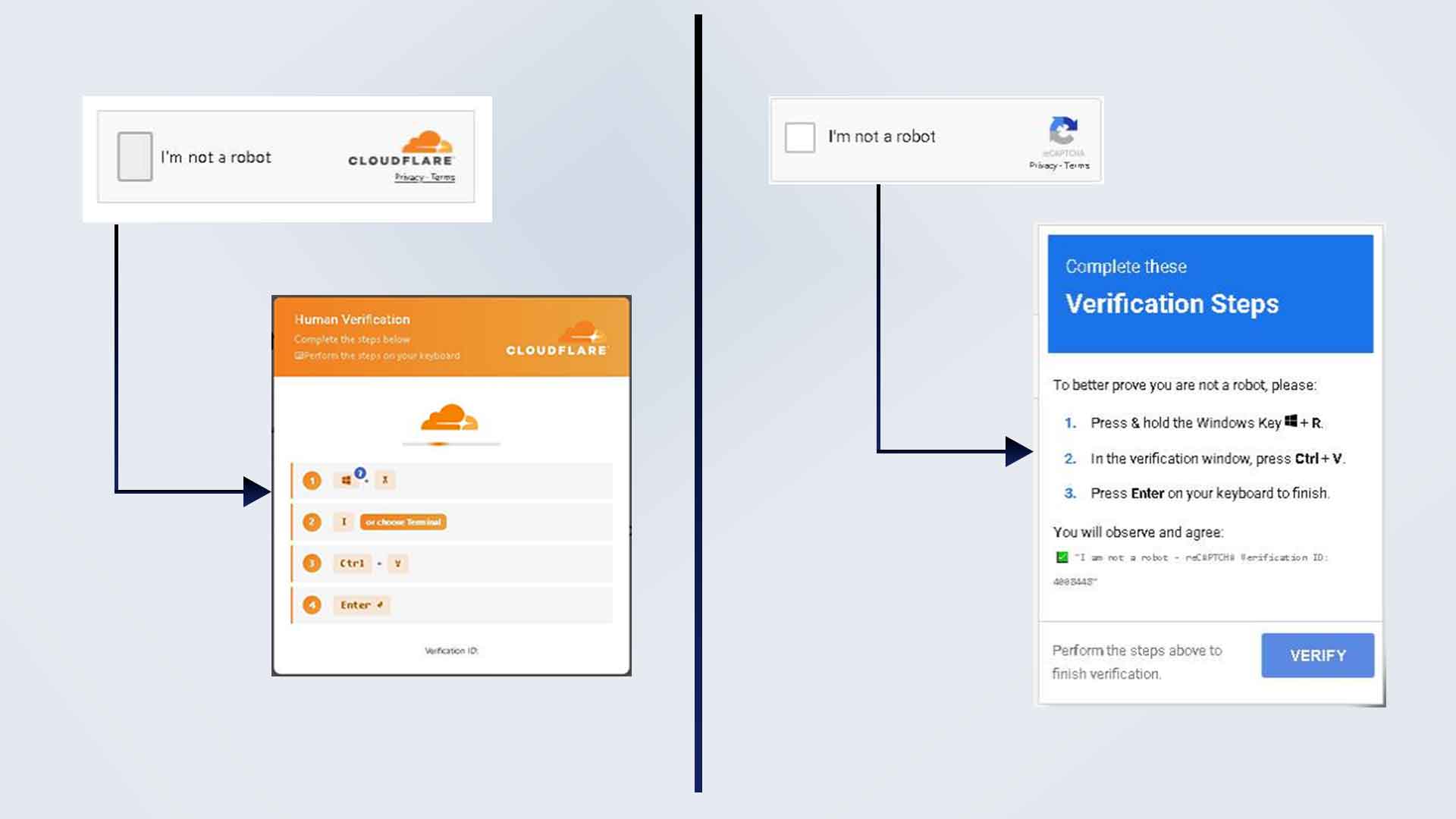
How ClickFix Attack Plays Out?
- A visitor lands on a page showing a fake CAPTCHA or Verification Required screen.
- They open the Windows Run dialog (Windows + R).
- They press Ctrl + V, pasting a command that was secretly copied to their clipboard by the page itself.
- They press Enter.
- A hidden malicious command executes immediately. The screen appears Fixed, but the device is now compromised.
For example of ClickFix attacks, see the two examples below:
The Dark Truth About ClickFix Attacks
Once compromised, the victim’s device can be left with a remote backdoor, giving the attacker ongoing access. From there, they can retrieve saved passwords, active session cookies, and stored login credentials, often enough to take over accounts without ever needing the original password. If the attack is traced back to your website, the fallout extends further still, bringing search-engine warnings, blacklisting, and a lasting loss of user trust.
Red Flags to Watch For
A compromised site rarely announces itself outright, but it usually leaves traces. Watch for a CAPTCHA, Security Check, or Verify You’re Human pop-up that you never added, or visitor reports of being told to open Run, PowerShell, or a terminal. Unfamiliar admin accounts and unexpected changes to your theme or plugin files are also common giveaways. Monitor if any unusual outbound traffic, new scheduled tasks, or scripts occur/appear in your site’s code that you don’t recognize.
Precautions Every .lk Domain Website Owner Should Take
Most of these ClickFix attacks succeed because of small gaps left unattended, not sophisticated hacking. A few consistent habits go a long way toward closing the gap:
- Stay updated. Keep your CMS, plugins, themes, and server software fully patched.
- Lock down access.
- Use strong and unique admin credentials.
- Enable multi-factor authentication.
- Limit who can reach the admin panel.
- Remove accounts no longer in use.
- Check your site regularly. Periodically audit site files and embedded scripts for anything you didn’t put there.
- Back up often. Keep clean, regular backups so you can restore quickly if something is found.
- Never run blind commands. Don’t paste or run a command on your own device just because a website told you to, and make sure your team and visitors know the same rule applies to them.
- Respond fast. If LK Domain Registry or TechCERT sends a security check notice, act on it promptly.
What LK Domain Registry Is Doing
LK Domain Registry actively works to keep the .lk domain website ecosystem safe via:
- Continuous monitoring of the .lk domain website ecosystems through threat intelligence sources, including TechCERT.
- Active scanning of your .lk domain website/s for suspicious or malicious behaviour.
- Direct outreach to affected website owners as soon as a threat is detected.
- Restriction or takedown of malicious websites if the owner doesn’t respond.
If You Suspect Your Site Is Compromised
If you suspect your site has been compromised, acting quickly and in the right order matters more than acting fast alone. Here’s how to work through it:
- Contain it first. Take the affected page or site offline, or restrict access while you investigate.
- Clean it out. Remove any injected scripts, pop-ups, or unfamiliar admin accounts.
- Reset access. Rotate all credentials and API keys associated with the site.
- Restore carefully. If needed, bring the site back from a clean backup, then re-check it before going live again.
- Close the loop. If LK Domain Registry has contacted you, respond promptly and confirm remediation before requesting reinstatement.
Last, not Least
ClickFix attacks succeed because they exploit a moment of trust, not a flaw in code. Single unverified instructions such as Copy this, Paste that, Press Enter can compromise a device in seconds. For .lk domain website owners, basic vigilance and timely patching are the most effective defence, both for your own systems and for everyone who visits your site. On the other hand, LK Domain Registry remains committed to protecting the .lk ecosystem through continuous monitoring, rapid response, and close collaboration with .lk-registered website owners.